South Beach Tour Guidelines start with one useful fact: South Beach is free to visit, and the beach itself is public. There is no general admission fee to spend time on the sand, swim in designated areas, or enjoy the ocean views. Costs come from optional extras, including beach chairs, umbrellas, and private cabanas offered by rental operators along the shore. Parking, food, and nearby amenities can add to the day’s budget, too.

Find Your Ideal Stay in South Beach on Vrbo

Search extensive private home inventory, review verified guest feedback, and book your trip
with complete confidence.

Choosing where to enter the beach can save time, especially when carrying towels, bags, or equipment. Some entrances put visitors closer to lifeguard stands, while others offer a more convenient route from Ocean Drive, Collins Avenue, or nearby parking areas. Knowing where lifeguards operate also helps visitors choose a suitable swimming area and understand the beach’s warning flags.

Paid rentals make sense for visitors who want shade and a reserved place to sit for several hours. Others can bring their own towels and enjoy the public shoreline without paying for beach furniture. This guide covers South Beach public access points, lifeguard zones, typical chair and cabana rental prices, and the beach rules and etiquette worth knowing before heading to the water.

Is South Beach Free to Visit?

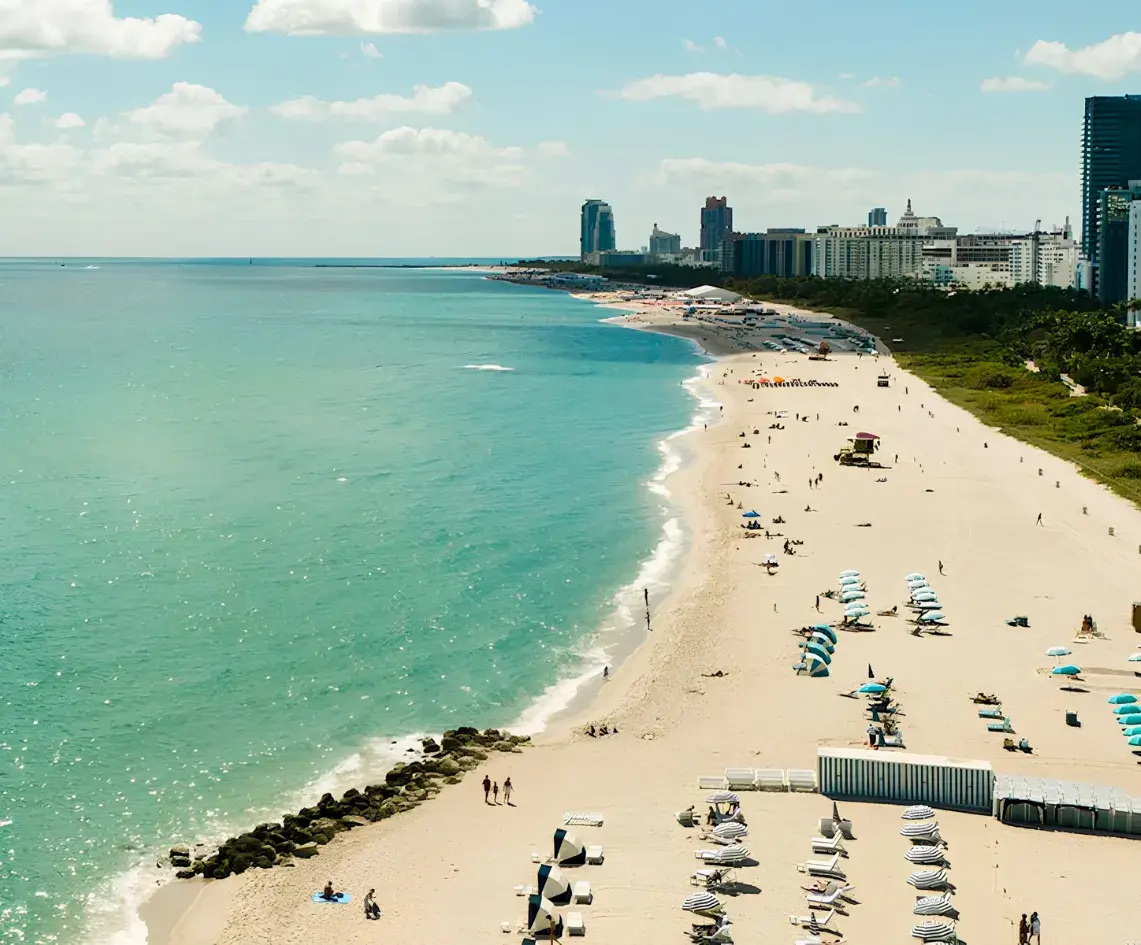
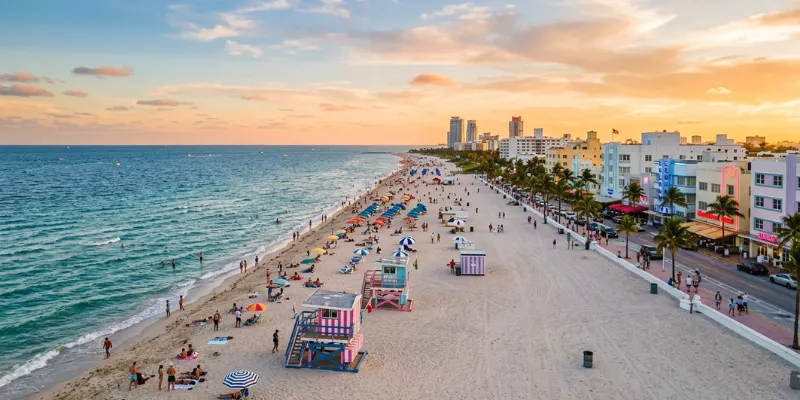
Aerial view of the beach at sunset with colorful lifeguard towers and crowds along the shoreline in South Beach.

South Beach (Photo Credit: Author’s Own Contribution)

Yes, South Beach is free to visit. The beach is public, so visitors can access the sand and enjoy the ocean without paying an admission fee. Charges apply to optional services such as beach chair, umbrella, and cabana rentals. Parking, food, and drinks can add to the cost of a beach day.

One detail worth knowing is that public beach access does not mean every beachfront service is free. Hotels may arrange loungers or other amenities for their guests in designated areas, but the shoreline remains subject to public beach access rules.

Visitors staying at a beachfront hotel may have access to hotel-provided chairs and umbrellas as part of their booking or through a separate resort fee. Day visitors can use the public beach without booking a hotel or paying for a rental setup.

Bringing a towel and finding a spot on the sand is enough for a low-cost visit. Those who want shade or a more comfortable place to sit can rent equipment from beach vendors, with prices depending on the location, season, and rental duration.

Parking is a separate expense. Spaces near Ocean Drive and Collins Avenue can be limited or costly during busy periods, so check public parking options before arriving. Food and drinks from nearby cafés and restaurants are optional, too. For visitors keeping costs down, the simplest approach is to use a public entrance, bring beach essentials, and pay only for the extras that make the day more comfortable.

South Beach Public Access Points

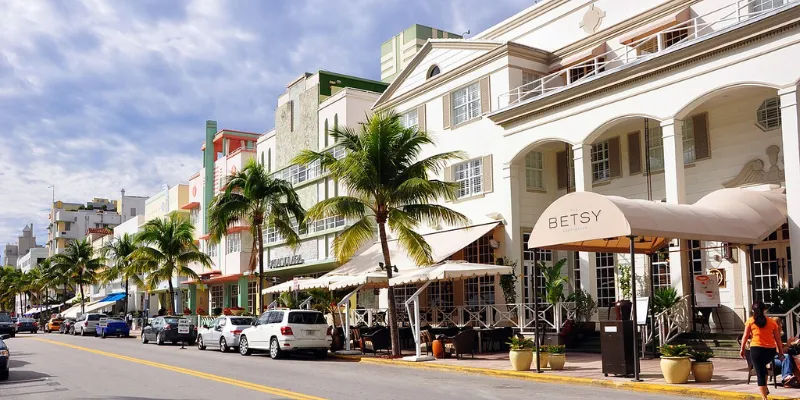
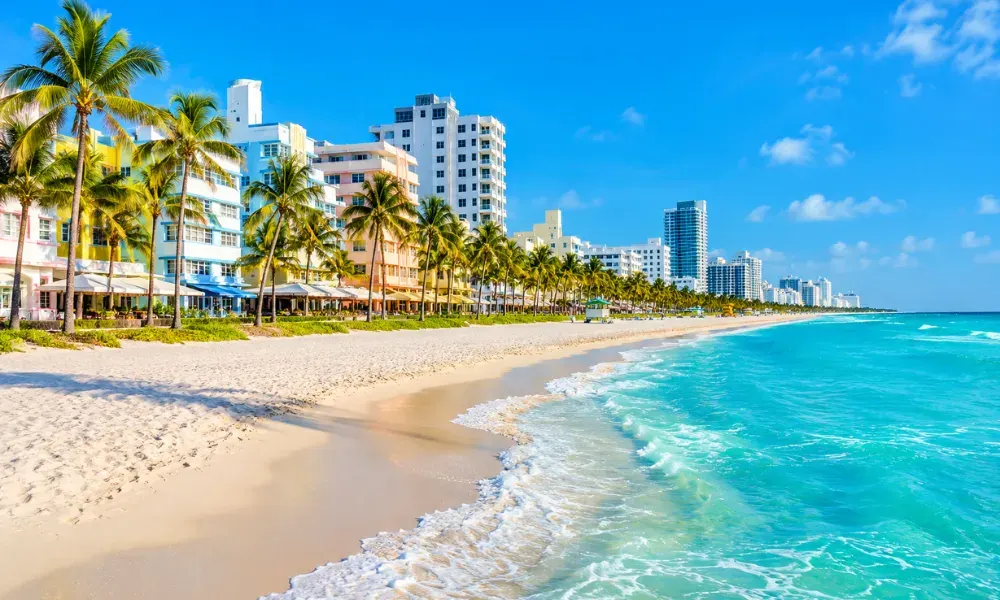
Palm trees and white buildings along a sunny street, showing South Beach Public Access Points near the beach.

South Beach Public Access Points (Photo Credit: wikipedia)

South Beach public access points are spread along the beachfront, with entrances generally located at regular intervals near numbered streets and major east-west roads. Ocean Drive and Collins Avenue provide useful reference points when navigating the area. The easiest entrance depends on where you are staying, whether you are walking from a nearby restaurant, and how close you want to be to a lifeguard stand or other beach facilities.

For a straightforward visit, start by identifying the nearest numbered street to your hotel or planned meeting point. Follow the public walkway toward the sand rather than assuming a hotel entrance or private-looking beach setup is the only way through. Public access routes can differ in their facilities, so check the route before carrying beach chairs, coolers, or other bulky items.

The best public beach entrances in South Beach depend on the facilities and setting you prefer. Near 5th Street, access is convenient for the southern end of the beach and the Ocean Drive area. Lummus Park provides access along the central stretch, with the park and its walking paths running beside the sand. Farther south, South Pointe Park offers another route to the beach near the tip of Miami Beach.

For the exact entrance locations, use the City of Miami Beach’s Parks and Facilities Map. The city’s beach information page also provides current beach conditions and a lifeguard tower map. These official resources are more reliable than an informal list because access routes and facilities can change.

Visitors with mobility needs should check the city’s accessible beach access guide. It identifies beach access mats and explains how to request a manual beach wheelchair at Lummus Park or South Pointe Park. Availability is limited, so calling ahead is sensible.

Before setting out, confirm the route, nearby parking, and available facilities. A little planning makes it easier to reach the right stretch of sand without an unnecessary walk along the beachfront.

Best Public Beach Entrances in South Beach

The best public beach entrances in South Beach are often the ones a few blocks away from the busiest stretch of Ocean Drive. Here, “best” means easier access, a better chance of finding open sand, and less time spent moving through crowds. The central beach near popular hotels, restaurants, and Lummus Park attracts heavy foot traffic, especially on weekends and during peak travel periods.

For a quieter start, consider the southern end near South Pointe Park or explore access points farther north toward the edge of South Beach. Both areas provide alternatives to entering directly beside the busiest Ocean Drive blocks. Conditions vary by day, so neither area guarantees an empty beach.

Parking requires a little more planning. Spaces close to the central beachfront can fill quickly, and a nearby entrance does not necessarily mean convenient parking. Check municipal parking locations before leaving and compare the total walk from the parking space to the sand. Arriving earlier in the day can also make finding a space easier.

South Beach Lifeguard Zones and Flag System

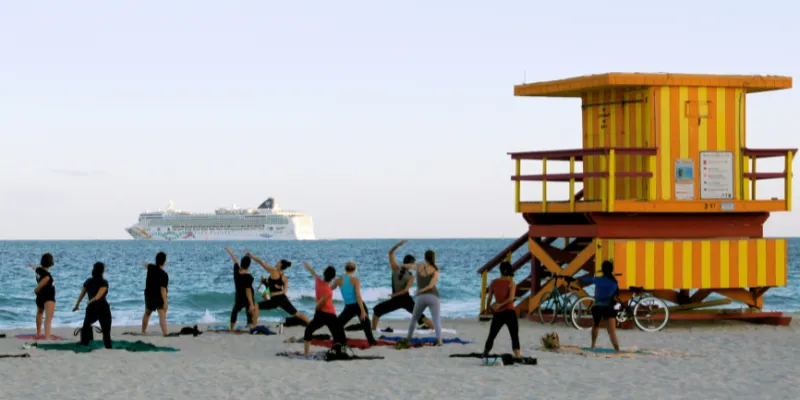
A group doing yoga on the sand near a yellow lifeguard tower with a cruise ship offshore, showing South Beach Lifeguard Zones.

South Beach Lifeguard Zones (Photo Credit: offthebeatenpagetravel)

South Beach lifeguard zones mark supervised swimming areas along Miami Beach, but lifeguard coverage is limited to designated daytime hours. Towers are not staffed around the clock, so check for an active lifeguard before entering the water.

Miami Beach uses colored flags to warn swimmers about ocean conditions. A green flag indicates low hazard, while yellow signals moderate hazards that require extra caution. Red warns of high hazards, and double red flags mean swimming is prohibited. A purple flag warns of potentially dangerous marine life, such as jellyfish or stingrays.

Conditions can change quickly, and the water may be dangerous even when the surface looks calm. Check the flag and posted signs at your specific beach entrance on the day of your visit. Follow lifeguard instructions and respect temporary swimming restrictions.

For current beach updates and tower locations, consult the City of Miami Beach’s official beach information page. Do not treat this guide as a real-time source for ocean safety or lifeguard staffing.

Recommended Vacation Rentals in South Beach

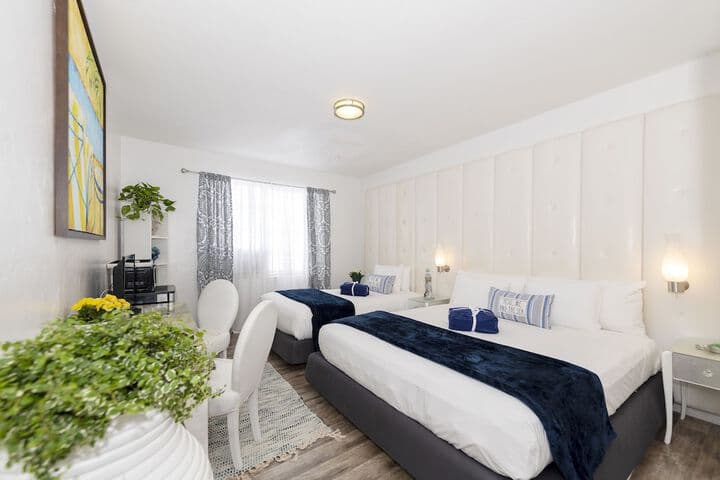
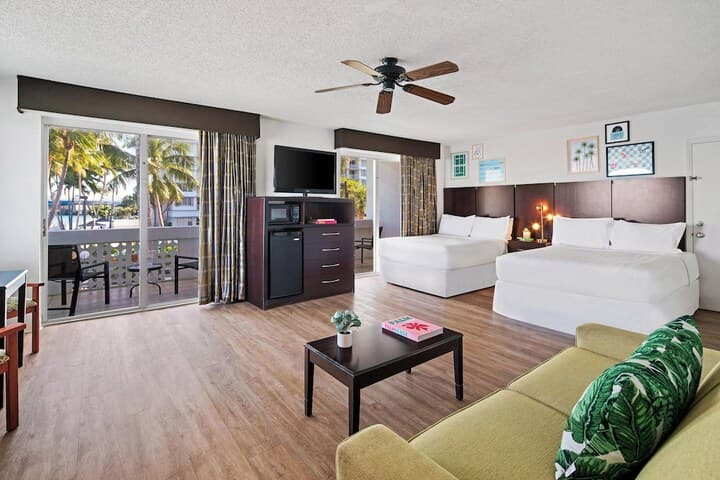
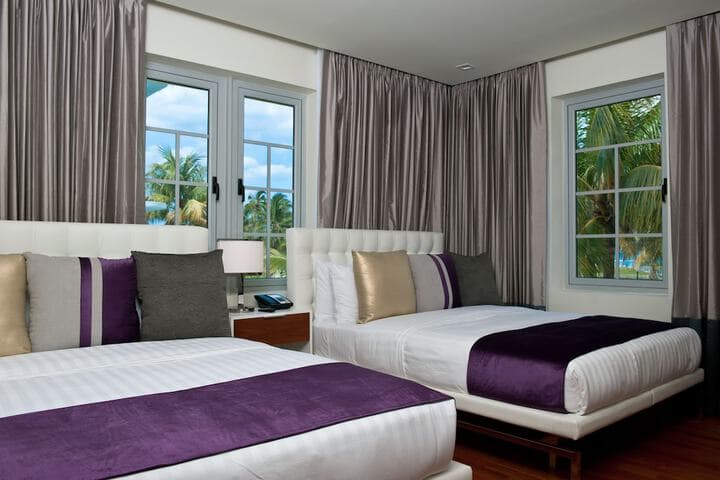
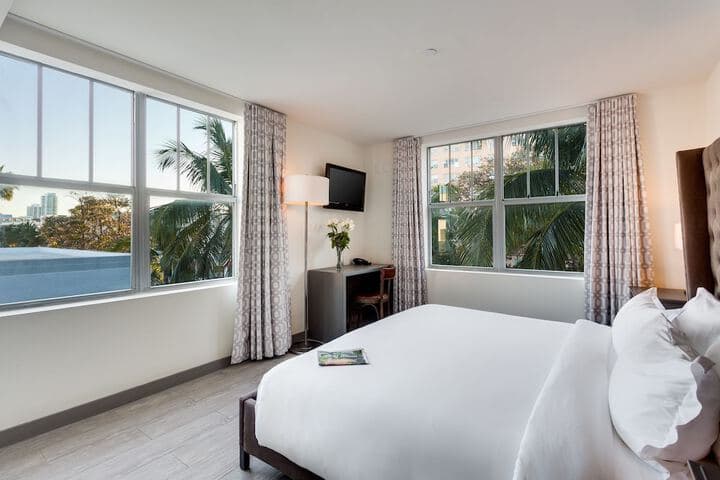
Travelarii Marquee – Miami stays

South Beach Cabana and Chair Rental Prices

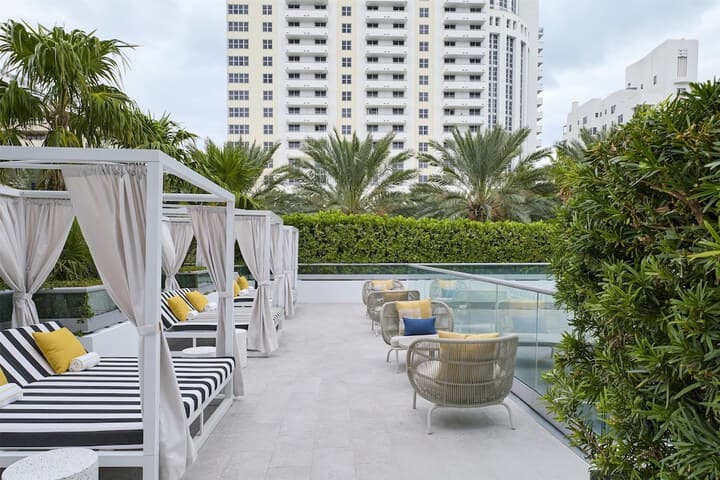
South Beach cabana and chair rental prices depend on the vendor, beach location, season, and level of service. Standard beach-vendor rentals are usually the lower-cost option. A pair of loungers with an umbrella may cost roughly $30 to $60 for a day, although prices can fall outside this range. Hotel and beach-club cabanas generally cost considerably more, particularly when they include reserved space, food and drink service, or additional seating.

Basic rentals suit visitors who want somewhere comfortable to sit without spending much of the day’s budget. A chair and umbrella are often enough for a few hours by the water. Cabanas make more sense for groups seeking shade and a dedicated setup for a longer stay. Some premium options require advance reservations or minimum spending on food and drinks.

Location affects the price, too. Rentals near popular hotels and the central Ocean Drive area may cost more than simpler setups elsewhere along the beach. Rates can also rise during busy travel periods, holiday weekends, and special events.

Before paying, ask what the quoted price includes. Check the rental duration, number of chairs, umbrella or cabana access, service charges, and any food or beverage minimum. Confirm whether the setup is reserved for the full period or subject to availability.

Treat online prices as estimates rather than guaranteed rates. Contact the specific beach vendor, hotel, or club for current pricing on your visit date. Comparing two or three options can help you decide whether a basic rental meets your needs or a private cabana justifies the extra cost.

South Beach Beach Rules and Etiquette

South Beach beach rules and etiquette are straightforward, but local restrictions can vary by location and occasion. Check posted signs at your entrance before settling in. Alcohol restrictions apply in public beach areas, and glass containers are prohibited in many beach settings. Noise rules may also apply, particularly near residential properties and during designated quiet hours. Do not assume that rules for a nearby restaurant, hotel, or private club also apply to the public beach.

Keep the sand and walkways clear. Set chairs, umbrellas, and bags away from access paths, lifeguard towers, and marked swimming areas. Leave enough room for other visitors to pass without stepping over personal belongings. If the beach is crowded, avoid spreading towels across more space than your group needs.

Take all rubbish with you or use designated bins. Cigarette butts, food packaging, and plastic items can end up in the water if left on the sand. Do not disturb wildlife or leave food where it may attract birds. Music should stay at a reasonable volume, and portable speakers should not become a nuisance to nearby beachgoers.

Follow lifeguard instructions, respect swimming closures, and keep clear of emergency equipment. If renting chairs or umbrellas, confirm the permitted setup area with the vendor rather than placing equipment wherever space appears available.

Rules can change during holidays, special events, or temporary beach restrictions. Check current city guidance and local signage for details on alcohol, glass, pets, fires, and other prohibited activities. A quick check before arrival helps prevent fines and avoids disrupting other people’s time on the beach.

FAQs

Yes. South Beach is a public beach, and access to the sand and water is free. You only pay for optional extras such as chair, umbrella, and cabana rentals, plus parking, food, or drinks.

Public entrances are located along the beachfront near numbered streets and major roads such as Ocean Drive and Collins Avenue. South Pointe Park and Lummus Park provide useful access areas. Check the official Miami Beach parks map for exact locations.

Green indicates low hazard, yellow signals moderate hazards, and red warns of high hazards. Double red flags mean swimming is prohibited. Purple warns of potentially dangerous marine life. Always check the current flag and follow lifeguard instructions.

Alcohol restrictions apply to public beach areas, so do not assume drinking is permitted on the sand. Rules may differ by location or event. Check current city regulations and posted signs before bringing alcoholic beverages.

Prices vary by vendor, season, and location. Basic chair-and-umbrella setups generally cost less than hotel or beach-club cabanas. Confirm the current rate and rental duration directly with the provider.

Arriving earlier can make it easier to find parking and a suitable spot on the sand, especially on weekends and holidays.

Yes. Keep chairs, umbrellas, and bags clear of walkways, lifeguard towers, and designated swimming areas. Follow posted instructions and leave enough space for others.

More Related Blogs From Trending Destinations